EVERY CHILD LEARNS DIFFERENTLY - UNDERSTADING THE INDIVIDUAL
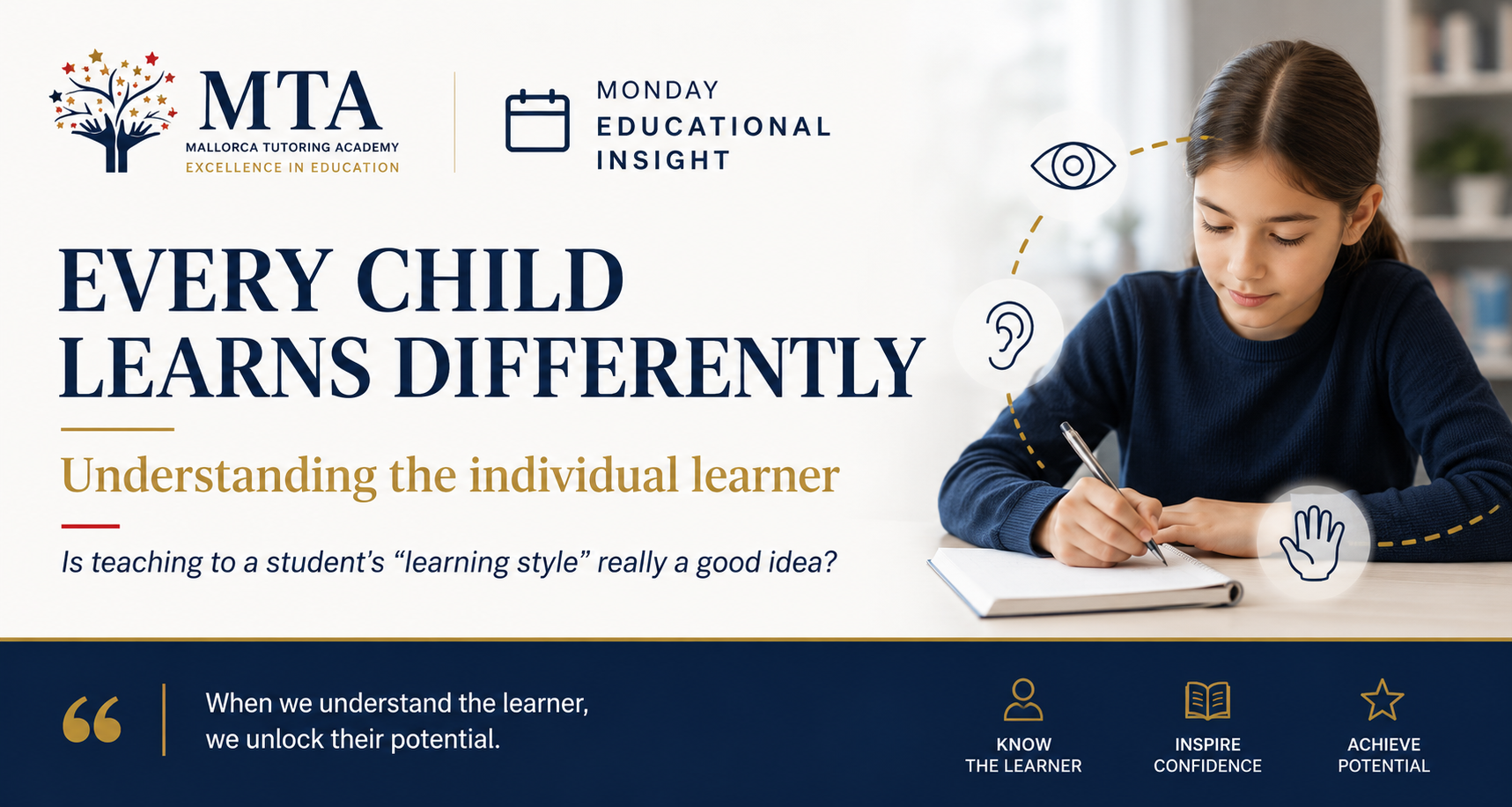
Is teaching to a student's “learning style” really a good idea?
Have you ever wondered why something that works brilliantly for one student simply doesn't seem to work for another?
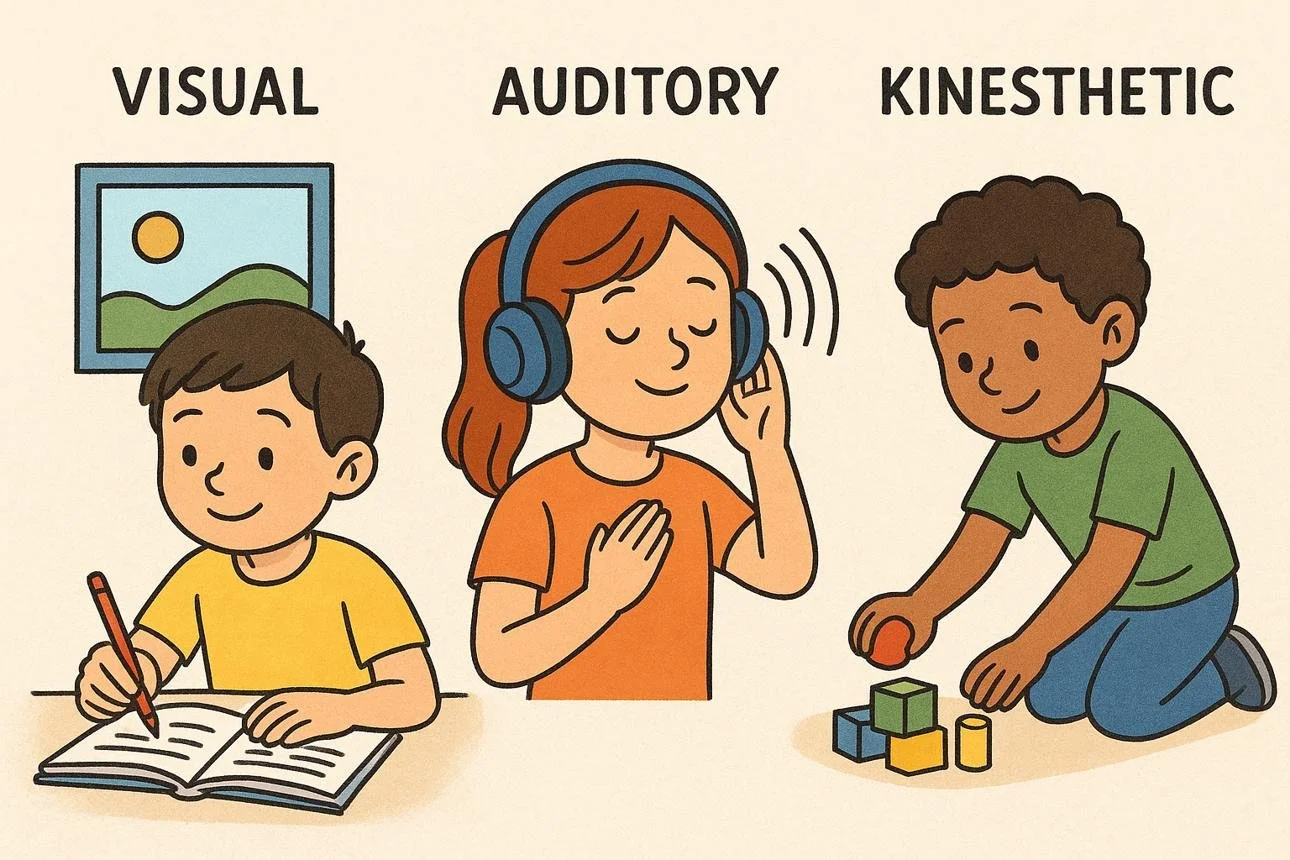
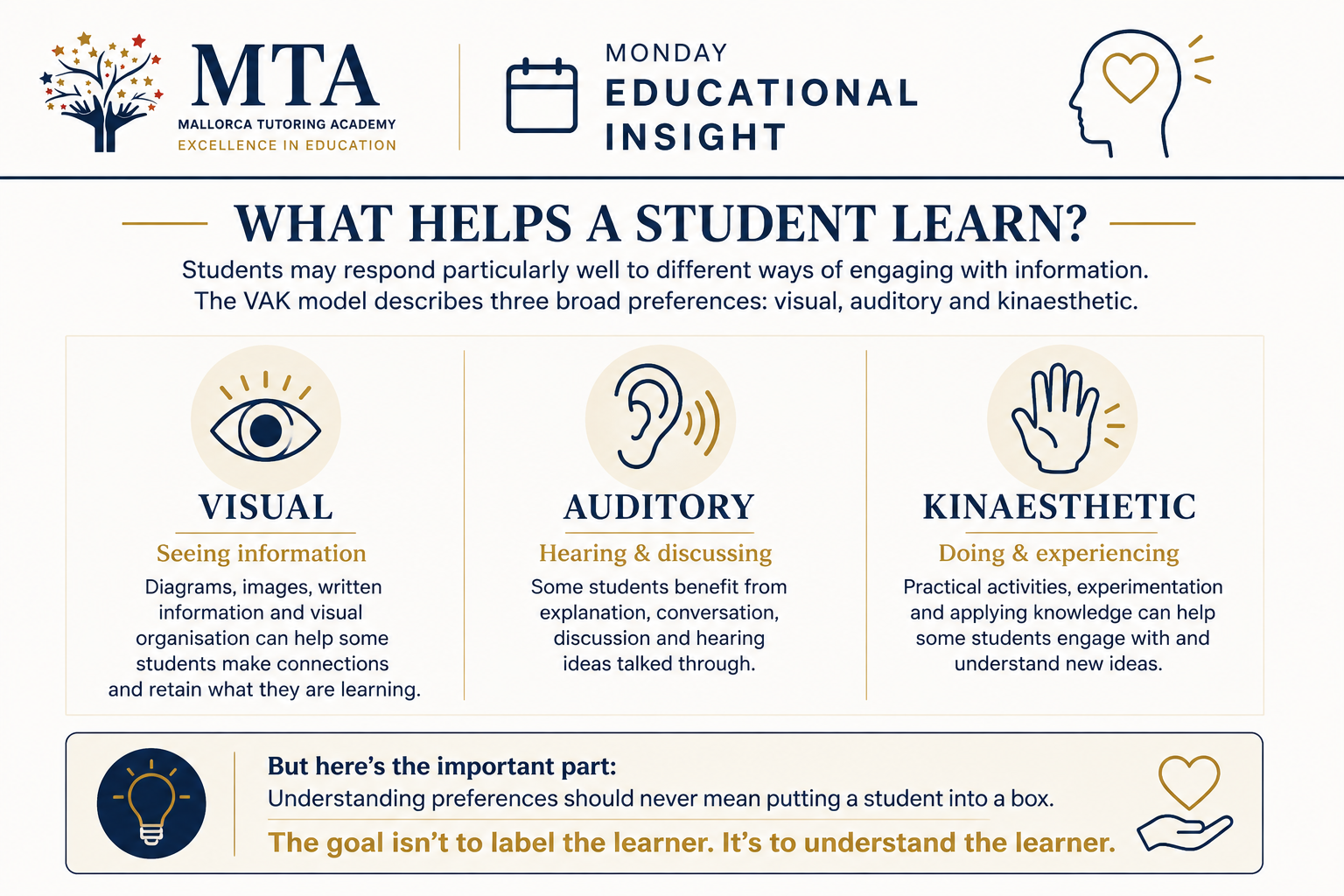
Perhaps one child remembers information more easily when they see it, while another benefits from hearing an explanation. Another may need to practise, experiment and experience something before it really begins to make sense.
It raises an interesting question:
Do children really have different learning styles — and, if they do, how should educators respond?
At MTA, we believe the most important starting point is not putting a student into a particular category.
It is understanding the individual learner.
Make it stand out
Whatever it is, the way you tell your story online can make all the difference.
Personalised Learning Starts With the Student
Good teaching cannot always mean delivering every lesson in exactly the same way.
Students have different strengths, experiences, levels of confidence and areas of difficulty. They can also respond differently to explanations, activities and forms of practice. That is why personalised learning matters. It isn't about creating a completely different curriculum for every child. It is about asking:
What does this particular student need in order to understand, engage and progress?
Sometimes that might mean seeing information presented visually.
Sometimes it might mean talking through a difficult concept.
Sometimes it might mean practical application.
And very often, it means combining several approaches.
The learner should come first — not the teaching method.
A Real Learning Journey
Sometimes, the importance of personalised learning becomes clearest when we experience it ourselves. At the age of nine, my daughter entered the Spanish state education system. At that time, she could not speak Spanish well and had no knowledge of Catalan. It was a huge step for her.
Although the school support was excellent, she still struggled with Catalan, particularly when it was introduced alongside new subjects. The Spanish system also expects students to take numerous examinations at regular intervals, and underperforming was causing her considerable stress.
As parents, we knew we needed to do something to help her. Firstly, we asked Judith, our excellent Spanish and Catalan tutor here at MTA, to give her some additional dedicated support.
Secondly, I drew on my previous experience to understand how she seemed to engage most effectively with information and created a revision framework around that.
She had a strong auditory preference, alongside visual tendencies.The rest, as they say, is history.
Her subsequent success at school and now in her amazing career has made me an incredibly proud mum.
Sometimes, finding the right approach can help a student rediscover their confidence in learning.
But Should We Teach Every Student in Every Way?
Absolutely!
This is where the discussion around learning styles becomes particularly interesting.
It isn't realistic — or desirable — for a teacher to try to match every activity perfectly to every student's supposed learning style.
Instead, effective teaching should expose students to different ways of learning.
A student who prefers listening should still develop their ability to read, analyse and work independently.
A student who enjoys practical activities should still learn how to process written information.
A student who loves visual resources should still develop the confidence to listen, discuss and explain ideas.
The goal is not to put students into boxes. The goal is to give them more tools.
So, Does Understanding a Learner Really Make a Difference?
There is ongoing debate around the scientific evidence for specific learning-style classifications. Many academics are sceptical, while many educators continue to find value in thinking carefully about how individual students engage with learning.
For us, the important question isn't the first but the second question
“Which box does this child fit into?”
“What can we do to help this child learn more effectively?”
Understanding a student's preferences can form one part of a personalised learning strategy used here at MTA — we don't use those preferences to limit what the student is capable of doing.
Learning Is Bigger Than Learning Style
Understanding how a student learns can provide a useful starting point — but it is only one piece of the puzzle.
Practice matters.
Students need opportunities to revisit what they have learned, practise their skills, make mistakes, receive feedback and try again.
They also need to develop perseverance and independence — the ability to keep going when something doesn't immediately make sense.
A personalised approach can help create the right foundation, but it doesn't replace the effort that learning requires.
There is no substitute for practice, practice, practice.
At MTA - the Learner Comes First
At Mallorca Tutoring Academy, we don't believe in a one-size-fits-all approach to education.
We believe in getting to know the student.
Understanding their strengths.
Identifying where they need support.
Building their confidence.
Adapting our approach.
And, perhaps most importantly, helping them become increasingly independent and confident learners.Because the objective isn't simply to help a student get through their next test.
It is to help them understand how they learn — and give them the skills and confidence to keep learning.
Every Child Learns Differently.
Every Learner Deserves to Be Understood.
MTA - Future Ready Learning